
unit 8 cold war and decolonization study guide
Unravel the dramatic events of the Cold War and the rise of independent nations. This ultimate Cold War History Guide makes complex decolonization topics easy to understand. Get ready to ace your exams and master global history!
Unit 8: Cold War and Decolonization Study Guide Overview
This comprehensive study guide for Unit 8 explores the profound global shifts from 1900 to the present. It examines how World War II ushered in an era of new superpowers, igniting the Cold War and fueling worldwide decolonization movements, shaping the modern world.
Setting the Stage for the Cold War and Decolonization
The aftermath of World War II profoundly reconfigured the global order, establishing the critical context for both the Cold War and widespread decolonization. Unfulfilled aspirations for greater self-government, simmering since World War I, erupted into intensified anti-imperialist sentiments across the globe. The war had significantly weakened European imperial powers, providing a crucial impetus for colonized peoples to renew their struggles for independence. Concurrently, World War II permanently altered the global balance of power, fostering the emergence of new global superpowers. Technological advancements achieved during the war further contributed to this monumental shift. After 1945, a novel conflict rapidly materialized, not between traditional empires, but among former wartime allies, specifically capitalist and communist nations. This fundamental division created sharp ideological boundaries and initiated a pervasive power struggle. This immediate post-war environment laid the foundation for the Cold War and simultaneously catalyzed decolonization, as new states began to navigate pressures from these burgeoning superpowers, shaping the geopolitical landscape for decades.
The Cold War: Ideologies and Superpowers
The Cold War emerged as a global power struggle after WWII, characterized by sharp ideological divisions. Two superpowers, the United States (capitalist) and the Soviet Union (communist), vied for influence, permanently altering the balance of power worldwide.
Emergence of Post-WWII Global Superpowers
World War II fundamentally reshaped the global balance of power, leaving traditional imperial nations severely weakened and creating a vacuum for new dominant forces. From the ashes of the conflict, two colossal powers emerged: the United States and the Soviet Union. The United States, an economic powerhouse with significant military strength, championed democratic capitalism and individual freedoms. Conversely, the Soviet Union, having endured immense wartime losses and expanding its influence across Eastern Europe, promoted communism with its emphasis on state control and collective ownership.
These two nations quickly became the world’s undisputed global superpowers. Their ascent marked not only a shift in military and economic might but also a profound ideological division. This stark contrast between capitalism and communism laid the foundation for the Cold War, a period of intense geopolitical tension and rivalry. Both the USA and the USSR actively sought to expand their respective ideologies and spheres of influence across the globe, establishing alliances and competing for loyalty among newly independent nations, thereby setting the stage for decades of global confrontation.
Capitalist and Communist Ideologies
The Cold War was fundamentally an ideological clash between two opposing worldviews: capitalism and communism. On one side stood the United States, championing capitalist principles. This ideology emphasized free markets, private ownership of resources and industries, and individual economic liberty. It posited that competition and the pursuit of profit would drive innovation and prosperity, often correlating with democratic political systems where citizens had a say in governance. The capitalist approach valued individual initiative and limited government intervention in the economy, believing this fostered the greatest overall wealth and freedom.
In stark contrast, the Soviet Union spearheaded the communist ideology. This system advocated for state control over the means of production, central economic planning, and the abolition of private property. Communist nations, led by the USSR, typically featured authoritarian governments with strong, top-down leadership, aiming to achieve a classless society through collective ownership. This approach prioritized the collective good over individual gain, often at the expense of political freedoms. The profound ideological divide created sharp divisions, shaping alliances and international relations throughout the Cold War era.
Key Cold War Conferences and Policies
The foundational stages of the Cold War were significantly shaped by a series of crucial conferences and strategic foreign policies. Key among these were the wartime and immediate post-war meetings that began to define the new global order. The Tehran Conference in 1943 initiated discussions on post-war cooperation, while the Yalta Conference in 1945 saw Allied leaders deliberate on the reorganization of post-war Europe, including the future of Germany and the establishment of spheres of influence, sowing seeds of future discord. Following the defeat of Nazi Germany, the Potsdam Conference later in 1945 marked a clear escalation of tensions, with palpable distrust between the Western Allies and the Soviet Union solidifying the ideological divide.
Beyond these pivotal conferences, major policies were instrumental in shaping superpower strategies and alliances. A prime example is the Marshall Plan, a monumental $12 billion aid package launched by the United States. This policy was designed to rebuild war-ravaged Western European economies, serving a critical dual purpose: humanitarian assistance and a strategic bulwark against the spread of communism. By fostering economic stability and recovery, the U.S. aimed to reduce the appeal of communist ideologies in economically vulnerable nations, thus actively containing Soviet influence. These conferences and policies irrevocably set the stage for decades of geopolitical rivalry.

Decolonization: The Process of Independence
Decolonization, the process through which colonies gained independence from imperial powers, intensified significantly after World War II. Increasing anti-imperialist sentiments fueled renewed struggles for self-government, leading to the emergence of many new sovereign nations worldwide.
Anti-Imperialist Sentiments and Independence Movements
The seeds of anti-imperialist sentiment were sown long before World War II, with hopes for greater self-government largely unfulfilled after World War I. However, the period following World War II proved to be a critical turning point globally. The devastating conflicts significantly weakened European imperial powers, making their continued control over vast colonial empires increasingly unsustainable and expensive. This global shift, coupled with the widespread ideals of self-determination espoused during and after the war, ignited and intensely amplified anti-imperialist sentiments across Asia, Africa, and other colonized regions. Nationalist leaders and movements, often inspired by earlier struggles for autonomy and a growing awareness of global inequities, effectively mobilized populations demanding an end to colonial rule. The process of decolonization, defined as the attainment of independence from imperial powers, thus notably kickstarted from these powerful post-war independence movements. These movements were diverse, ranging from peaceful negotiations and civil disobedience to more assertive armed resistance, all unified by the fundamental desire for sovereignty and self-governance. The anti-imperialist tide became an undeniable, transformative force, reshaping the global political map as former colonies fought for and ultimately achieved their long-sought freedom.
The Non-Aligned Movement and New States
As the wave of decolonization swept across the globe, creating numerous newly independent nation-states, these emerging countries found themselves in a precarious position amidst the escalating Cold War. With the United States and the Soviet Union vying for global influence, these new states were under immense pressure to align with either the capitalist or communist bloc. To safeguard their freshly acquired sovereignty and avoid entanglement in superpower rivalries, many of these nations opted for a different path, leading to the formation of the Non-Aligned Movement (NAM). Leaders like Sukarno played pivotal roles in establishing this crucial movement.
The Non-Aligned Movement aimed to promote independent foreign policies, resisting the establishment of networks that would extend the ideologies and influence of either superpower. It advocated for peace, mutual respect, and cooperation among nations, allowing new states to chart their own course without becoming proxies in the Cold War. This collective stance provided a platform for these nations to assert their interests on the global stage, challenging the bipolar world order and fostering a sense of solidarity among countries determined to avoid external domination, thus profoundly shaping the international landscape.

Connections Between Cold War and Decolonization
The Cold War significantly intertwined with decolonization. As new nation-states emerged, both the US and USSR sought to extend their ideologies and influence, often providing support or opposition to independence movements, thus linking global power struggles to national liberation.
Superpower Influence on Newly Independent Nations
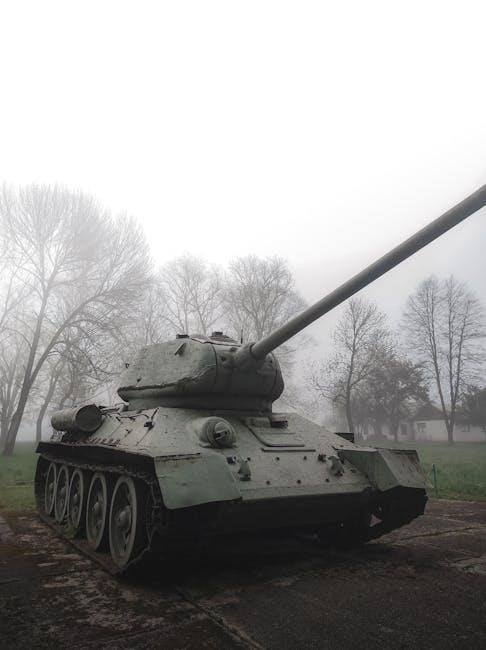
The emergence of new nation-states from the ashes of colonialism created a fresh battleground for the two dominant Cold War superpowers: the United States and the Soviet Union; Eager to expand their respective spheres of influence and propagate their ideologies, both nations actively courted these newly independent countries. The US, championing capitalism and democracy, often offered economic aid packages, military assistance, and political backing to governments aligned with its vision, aiming to prevent the spread of communism. Conversely, the Soviet Union promoted communist ideals, supporting socialist movements, providing military training, and offering economic assistance to regimes that leaned towards its authoritarian model. This intense competition often saw superpowers intervening directly or indirectly in local conflicts, exacerbating internal tensions within these nascent states. Many newly independent nations found themselves caught between these two powerful blocs, facing immense pressure to choose a side, which profoundly shaped their early foreign and domestic policies. This dynamic eventually spurred the formation of the Non-Aligned Movement, as some states sought to resist superpower pressure and maintain their sovereignty, navigating a complex geopolitical landscape defined by the ideological struggle.
Major Conflicts and Case Studies
This section explores pivotal conflicts that exemplified the Cold War’s global impact and the struggles of decolonization. These case studies reveal how superpower rivalries intertwined with independence movements, leading to proxy wars and significant geopolitical shifts worldwide.

The Korean War (1950-1953)
The Korean War, from 1950 to 1953, emerged as a critical flashpoint in the early Cold War, directly showcasing the intense ideological struggle between communism and capitalism. The conflict began when North Korea invaded South Korea in June 1950, aiming to forcibly unite the peninsula under its communist government. This unprovoked aggression swiftly drew international condemnation and a decisive response.
The United Nations, leveraging a Soviet absence, authorized military intervention to defend South Korea. A multinational force, primarily American and commanded by General Douglas MacArthur, was deployed. As UN troops advanced deep into North Korea, China intervened, supporting its communist ally and fearing a threat to its own security. This Chinese entry drastically escalated the conflict, leading to a fierce, protracted stalemate near the 38th parallel.
Despite widespread devastation and heavy casualties, a clear victor never emerged. An armistice was signed in July 1953, halting the fighting but leaving Korea officially divided along the pre-war border. This enduring division persists today, with North Korea remaining an isolated and often dangerous nation. The Korean War profoundly demonstrated the devastating impact of superpower proxy conflicts and solidified the geopolitical landscape of East Asia.
The Vietnam War and Indochina
Following World War II, France attempted to retain its colonial grip on Indochina, but faced fierce resistance from Vietnamese nationalists, primarily the Vietminh. Their persistent struggle for independence eventually led to the 1954 Geneva Accords, which temporarily divided Vietnam into a communist North and a non-communist South. However, planned reunification elections never materialized, solidifying the division and setting the stage for further conflict.
Soon after, war erupted between North and South Vietnam. France, and subsequently the United States, supported the South in its effort to resist communist expansion. The United States, fearing the spread of communism across Southeast Asia (the “domino theory”), steadily deepened its involvement, providing extensive military and financial aid, and eventually deploying large numbers of troops. Despite this significant support, communist Viet Cong fighters in the South, backed by North Vietnam, proved formidable.
The protracted and brutal conflict, marked by guerrilla warfare and immense human cost, ultimately saw the communist forces prevail. The fall of Saigon in 1975 led to the reunification of Vietnam under communist rule. This outcome was a major setback for the United States, severely impacting its global image and demonstrating the complexities of superpower intervention in decolonizing nations during the Cold War era.
Study Guide Resources and Key Concepts
Explore comprehensive study guides, practice quizzes, and academic resources for Unit 8. Review essential vocabulary and historical developments. Key concepts cover the Cold War, decolonization, and their global impact for AP World History.
Vocabulary and Review for AP World History
To excel in Unit 8 for AP World History, a thorough grasp of key vocabulary and historical concepts is paramount. Start by defining core terms, prominently including Decolonization, understood as “the process through which colonies gained independence from imperial powers.” Other vital vocabulary encompasses the Cold War, Non-Aligned Movement, figures like Sukarno, and the critical Nuclear Arms Race. Leverage diverse study tools such as Quizlet flashcards, comprehensive learning packets, and detailed guides from resources like Heimler’s History and Cacioppo History. These materials provide all necessary essential events, vocabulary, and geographical locations pertinent to the AP curriculum. Engage with practice quizzes and review questions to solidify your understanding of global resistance, superpower dynamics, and the intricate connections between Cold War events and decolonization. Focus intently on the learning objectives and historical developments outlined for each topic, especially those setting the stage for this transformative era from 1900 to the present. Such diligent review is indispensable for success on AP exam essay components (DBQ, LEQ) and multiple-choice questions, ensuring a complete mastery of this pivotal period.